Enterprise Marketing's Reckoning with The GEO Growth Summit Arrives at INDEX'26 New York
Jun 10, 2026
NewsVoir
Mumbai (Maharashtra) [India]/ New York [US], June 10: AI has not just changed how people search. It has changed who answers. And for the first time, that answer is not a list of links - it is a single response, generated by a model, citing sources it has chosen to trust. For enterprise brands, that shift is not coming. It has arrived.
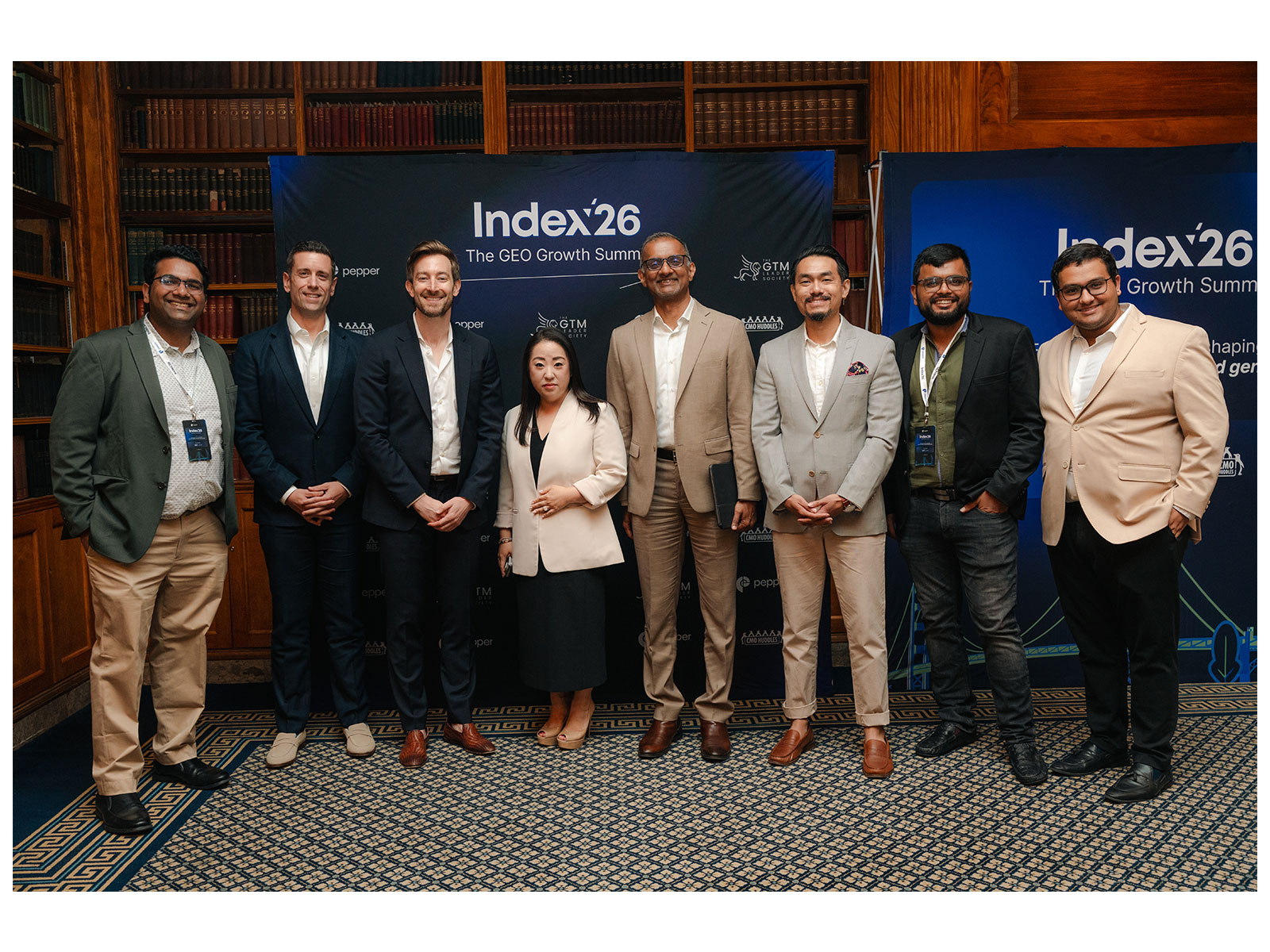
That was the ground truth at INDEX'26 New York, hosted by Pepper on May 27. More than 200 CMOs, VPs of Marketing, growth leaders, investors, and technology builders convened for the New York edition of what Pepper bills as the world's first The GEO Growth Summit - a forum built not to debate whether generative AI is disrupting search, but to determine what winning looks like on the other side of that disruption.
The results were unambiguous. Across every conversation - from the boardroom to the brand team - the same inflection point kept surfacing: organic discovery has been structurally rewired, and the strategies that drove growth for the past decade are losing their footing fast. CAC is climbing. Traditional SEO signals are weakening. Buyer journeys now fracture across seven or more touchpoints before a decision is made. And through all of it, AI models are forming opinions about brands - from reviews, citations, third-party content, and web authority - long before a human ever enters a search bar.
"INDEX was created to bring together operators who are actively rethinking how growth works in a world where AI has become the primary interface for discovery. Search is no longer about ranking pages - it is about being retrieved, cited, and trusted by AI systems. INDEX'26 is where leaders come together to understand this shift and build practical strategies to win in the new era," said Anirudh Singla, Co-Founder & CEO, Pepper.
The urgency extended well beyond the marketing function. Investors and board members, as surfaced in one of the day's most candid conversations, are already asking their portfolio companies about AI search visibility - often without the CMO in the room. For enterprise leadership teams, the message was pointed: Generative Engine Optimization is no longer a content team initiative. It has become a business continuity question.
That reality landed differently for regulated industries. In financial services, the stakes of AI getting it wrong go beyond brand damage. A misattributed claim, a hallucinated product detail, an AI-generated answer that contradicts compliance policy - these are not PR problems. They are regulatory ones. Leaders from DTCC and Arbor Realty Trust gave texture to what it means to navigate brand authority in an environment where no single team controls what an AI says about you.
"I think of myself as much more of an operations and architect of the department than a traditional marketer. We've gone from Chief Marketing Officer to Chief Architect," said Lauren Wagner Boyman, CMO, KPMG US.
The CMO role itself was on trial. Lauren Wagner Boyman of KPMG US and Drew Neisser of CMO Huddles - drawing on data from more than 600 CMO conversations - made the case that the function has been permanently restructured. Speed, agility, and content efficiency have displaced traditional brand stewardship as the core mandate. Consumer brand leaders from Uber, Unilever, Major League Soccer, and Samsung Ads confirmed the same pattern from a different angle: when AI compresses buyer choice to a single recommendation, the brand that wins is the one the model has learned to trust, not the one with the biggest media budget.
"The physical shelf had 100 options. E-commerce became endless but we shop above the fold - so 100 became 5. AI-led search is about to compress 5 into 1. You want to be that one - every time, in every platform," said Deepak Subramanian, Global VP Marketing, Unilever.
Pepper used the summit to unveil Atlas, its agentic OS for organic growth - positioned not as a GEO tool but as an outcome engine built to own traffic, citations, velocity, and pipeline in the AI era. Guy Yalif of Webflow separately debuted the AEO Maturity Model, grounded in data from millions of B2B websites, giving attendees a diagnostic framework to benchmark where their organizations actually stand. Practitioners from RocketReach, Optimizely, Stacker, and G2 closed the day with a ground-level view of what is working inside the GEO stack right now.
INDEX'26 New York follows the sold-out San Francisco edition in April, which drew more than 200 senior leaders from Salesforce, NVIDIA, Intel, Snowflake, Gong, and Demandbase. Future editions of the summit are planned for additional markets.
(ADVERTORIAL DISCLAIMER: The above press release has been provided by NewsVoir. ANI will not be responsible in any way for the content of the same.)